
New Cover For "Tunnel Vision"
Wohooo! Lookit! I seeee you!
Coming soon to a bookstore and ereader near-ish to you:

Cover created by David Kolenda.
Is Your Name On The Asylum Wall? Here are the Acknowledgments
In which I list names for the acknowledgments of Tunnel Vision
Lots of people have encouraged me as I've worked on "Tunnel Vision", and I want to thank you. Since The book is about to go to print, and here are the names I've culled from looking at the website and Facebook and previous comments. If your name isn't here and you want it to be, let me know. Also, of course, if you DON'T want to be listed. It is a story about an asylum in the 1930s, after all. It's pretty messed up. You might want to keep your distance. :)

THE NAMES
Janel Atwood Heird
Tim Beeler
Melissa Baldwin White
James B. Bradshaw
Patrick L. Callahan
Alexa Dannenberg
Tristan De Boer
Bettie Ellens
Christopher Grooms
Sydney Groth
Evan Heird
Alysia Hough
Diana Peffer Johnson
Bob Kostic
Kim McNiel Smith
Malinda Peterson
Roxanne Riley Victor
Deborah Rosko
John Shull
Liliana Juracon Stephenson
Kerri VanderHoff
Katie Wibert
Cory Young
You Can Be In The Acknowledgments of "Tunnel Vision" If...
You can be in the acknowledgements of "Tunnel Vision" if you give me one hundred dollars!!! Naw. I'm just kidding. You won't need to give me one penny. Unless you really want to, then, okay. I'll take it. Here's the backstory:
Way back in the summer of 2010, I asked readers to vote on what kind of blovel (blog/novel) I should write. They chose a gothic story set in the 30s, and it eventually became “Tunnel Vision”, the story of twisted love in The Northern Michigan Insane Asylum.

I’m writing the acknowledgements and I need your help. Please let me know if you did any of the following so I can include your name in the book (if that’s okay with you):
- You read the blovel, even if you never told me or anyone else
- You commented on a post or on my Facebook page
- You gave a character name suggestion
- You encouraged me in any way to keep on going
I’d love to include your name in the acknowledgments, so let me know who you are either by commenting here with how you’d like your name to appear, on my Facebook page, or send me an email to Tanya@tanyaeby.com.
And if you have to give me a name like Ben Dover, I’ll put it in there too, because I’m a teenager at heart and that stuff makes me laugh. But your real name would be good too.
And in case you’re wondering: here are the characters that made it into the book:
Eliot Kinney
Bill Pepperidge
Mallie Lyn Peters
Lilliana
Dr. Christopher Grooms
Margaret Grooms
Harvey Briggart
Rose Kinney
Alma
Charlie Young
Lynnie Grant
Tim Beeler
Robert Kostic
Alma
Nurse Kolenda
Tunnel Vision--Chapter 20 & THE END
1938, Northern Michigan Insane Asylum Three hundred and seventeen souls took flight during the tuberculosis epidemic. Ama and the rest of the team of nurses and volunteers tended to them, cleaned their beds, soothed their coughs, and prepared bodies for burial. She worked endlessly, at all hours of the day, and took over for Nurse Kolenda when she developed the telltale rattle in her chest. Nurse Kolenda recovered; many others did not. And when the epidemic passed and the halls emptied and were washed and polished again, the hospital returned to its former state as an asylum. Patients were locked in their wards. Treatments for their mental ailments resumed. And a new doctor arrived on campus. He brought with him knowledge of a new technique that would cure the most violent of patients of the terrible spirit writhing within them. By drilling holes into a skull, the mean spirits were released and the patient returned to life quieter, simpler, and (Ama thought) without any personality left. Later, the surgery would be replaced with the simple use of an icepick through the eye and into the frontal lobes of the brain. This, though, would be a decade yet before coming.
Ama grew big with child and though everyone at the asylum knew she was pregnant, knew in fact that Doctor Kinney had placed it within her womb, the nurses and doctors responded with silence. They did not acknowledge the pregnancy and so it was as if it didn’t exist.
Mallie Lyn Peters returned to work at the asylum where she would take up duties as one of the cooks in the three cafeterias. She placed the food order with George who brought her baskets and baskets of meat, cheese, fruits and vegetables. And one day, he brought her a ring.
The moment he slipped the ring on her finger, far away, in the belly of the hospitals, Ama bit her lower lip and began to push.
Her daughter entered the world much as she did…in the shadows…but this time, there were hands to welcome her as several inmates had followed their favorite nurse down into the tunnels. They had not turned their backs to her pregnancy. In fact, they awaited it with anticipation and Ama’s daughter was greeted with laughter and joy.
Ama gave her new child her nipple to suckle. She pulled on it and her lips smacked. The pain that ran through her breast struck her as proof that her child was alive and fierce with longing. She would grow strong and healthy, but she would not grow up here.
On their wedding day, when George carried Mallie Lyn over the threshold and into the small dusty space that was their kitchen, a basket greeted them with a small child wrapped in hospital cloth. Mallie immediately heated some milk and soothed the screaming babe with milk dribbled from a cloth. The newlyweds did not discuss it. They looked at each other and simply nodded. They would call her Elizabeth. She was their daughter, for what does it matter where a person comes from or how they’re brought into the world as long as once they are in it, they are swaddled in love.
Chapter Twenty-One
1957
Now I know. I know the truth of my past, the place where I started, and how my parents came to raise and love me.
Am I better for knowing the truth? Yes. I think I am. I have always felt different from my family, and now I know why. I refuse, though, to believe that I am an abomination. I am not doomed to repeat the mistakes of Dr. Kinney, my biological father. Nor am I doomed to remain trapped in a place like my biological mother, Ama. She was trapped, I think. Or maybe not. Maybe giving me up was a choice that allowed her to do good work at the hospital. She stayed at the asylum until her own death twenty years ago.
To think, I missed knowing her by one year. Had I found this out last year, I might have tracked her down. We would have shared tea and…what? Conversation?
I cannot answer all the questions I have about my birth, but I can answer the ones my daughter will have about her own.
I will tell her that when she was but one month from being born, her grandmother (Mallie Lynn Peters) and I packed my belongings into two suitcases and I left that house on 2nd Street. I left to dishes crashing and my husband screaming and as Ama did so many years before, I heard the echo of my footsteps as I walked away from him.
We are not who our parents were. We are unique creatures and worthy of love.
Now, as I write this, my darling girl Ama Lynn naps next to me. I can here the soft puffs of breath from her. My mother works in the garden. And I think of what is to come next. I, too, am no longer trapped. I do not know what waits for me and my daughter, my daughter who represents the best parts of me and her father, the best things in life. My daughter represents hope. I will love her. I will tend to her. And when she grows up she will have choices before her, and she will not be afraid.
There is no reason to be afraid.
We will not hide in the tunnels anymore. We will be fiercely happy. We will move forward, into the light.
THE END
Tunnel Vision--Chapter 19
1957, Traverse City, Michigan In my mind, I hear my mother’s footsteps echoing in the very corridor I’m standing in now. My adopted mother has taken me on a tour of Munson Hospital, formerly known as the Northern Michigan Insane Asylum. It is not the facility we’re looking at, but ghosts. I see my father in the shadows. He is a threatening force. And I see my mother in the way the light pours in through the windows.
Of course, I am not sure if I should even call Ama my mother. Isn’t a mother the person who raises you, who loves you, who tends to you? Is a mother purely biological, or is it a choice?
I run the palm of my hand over the smooth curve of my belly and within me my daughter shifts.
Something else shifts in me too. An idea, maybe. Something about life. How much of our lives, our happiness, is a choice? And how much is forced upon us? The woman who stands before me now, her shoulders hunched, her face lined with age and worry and the pain of giving birth to six children (only three who are still living), this woman…what choices has she made in life? I am almost afraid to ask her.
It turns out that I don’t have to.
“Come on, dear,” my mother says to me, her voice lilting with the brogue of her youth. “Let me grab my shawl and we can walk home and have a cup of tea. It will soothe the little one within you.” She smiles briefly and for a moment I catch a glimpse of the woman she was before my father died. “Perhaps it will soothe me too. Let us have the rest of the story. I will tell you what happened next.”
She tells the head nurse that she is leaving for the day. I follow her out the door, leaving both the darkness and the light of the asylum behind me.
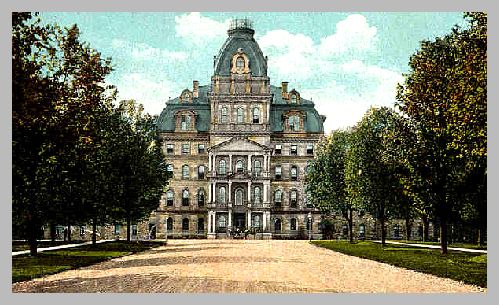
As we walk down the long path that leads to the gate, I realize that even this place has undergone a transformation. There are no longer cries from crazed spirits, but the hollow silence of a hospital ward. Things are sterile now and humane. Some say it is on account of the frontal lobotomies practiced here. They say modern science has brought a great calm. I don’t know if that is true.
Sometimes when there is silence, trouble boils underneath.
I know this, because there is something boiling within me.
The gate is iron and twenty feet high. It is open. We walk through and turn the corner. My mother’s house, my old house, is only two blocks away. While we walk, I slip my arm into hers. We walk home in silence. I can wait a few minutes more for the rest of the story.
No.
Not ‘the’ story. I can wait a few minutes more for ‘my’ story. That’s what this is about after all. It’s about me. The place where I began. Was I a choice or a curse? Did I begin with hope or with fear? Does it even matter? For me, it does. I am so close to deciding what I must do, but before I can think of the future, I have to fully understand my past.
It’s waiting for me. Just there. Shivering in the distance.
I can almost touch it.
Tunnel Vision--Chapter 18

Kinney’s bed lay in the front porch of Building 50, surrounded by rows and rows of other patients in white beds, their pillows dotted with red. “Do not watch him, dear. It does not do your spirit good,” Mama Lilliana said to Ama.
They stood in the shadows, where they were both so at home. Lilliana wore nothing but a thin nightgown, the outline of her voluptuous body just visible beneath the gossamer threads. She looked as if she belonged in the asylum, as if she were a part of the place. Madness had seeped into the lines of her face, the spin of her long hair. But it had not etched itself with pain, but with acceptance. With an embrace. Sometimes a house or a church or an institution could reach its tendrils into the very fabric of a person and bind to them. This had happened to Lily. She was a part of the hospital now and she did not fight this. No. There was no need to fight that which you loved.
Ama, on the other hand, had changed. There was a time when she belonged in the shadows. When her very existence was a mad secret whispered through the tunnels that crisscrossed underground. Now, though, she stood clothed in her buttoned white dress, stretched taut over the new curve of her growing belly. The nurse’s hat was pinned securely to her thick hair…and she looked at Kinney with the detachment that authority breeds. Ama was no longer an inmate in her house, but an authority.
“He’s gone, you know. There’s no hope for him. The sickness has him,” Ama said. “But then, the sickness has always had him, hasn’t it.”
Lilliana’s response was a pat on the back.
“I can get you out of here,” Ama continued. “I have money now. I know people. I can set us up a house. For all of us. For you and Papa Beeler and…” She paused, knowing that her other parents, Papa Kostic and Mamma Grant, were gone now to that place of white from which they could never come back. Lilliana did not answer this time. In fact, she had already disappeared into the shadows, so quickly and silently that Ama wondered if she had ever been there at all.
The hospital shivered with the coughing of the dying.
Kinney tossed in his bed. Writhed. He was like a snake trapped in cloth and tried to free himself by endlessly turning, thus snaring him even more securely. His cough became a great crescendo. He clawed at his throat. He fought against his own body.
Ama could have gone to him and said, “This, this is what it feels like to be trapped. This is what you have done to so many of the ones that I have loved.” Or perhaps, “Look! Look around you doctor! You are just like us, now!” Or maybe even, “You are not my husband and I am not your wife and you are not well. You are not sound.”
He needed no curses from her though. Justice was being delivered by an invisible hand. Ama saw the hand reach into his mouth, swirl into his mind and take what was there, steal his breath and his heart…and it was this that he choked on. Ama knew that for Kinney there would be no tunnel of white light to pass through. His end would come with the coldness of not a soul caring.
It only took a minute or so and it was over. Kinney gave up fighting. His body contracted and then released.
The ward fell silent for a moment as if relieved from his passing. Ama stared at him. He did not move. The child in her belly reached forward. Ama felt her child’s caress inside her and it was as if it were saying goodbye.
Ama turned and walked down the hall.
Her footsteps faded into the darkness.
Tunnel Vision IS BACK!
I have turned over my new leaf. What on earth does that mean anyway? Whenever I turn over a leaf, I just see it's veiny underbelly. Expressions. Sheesh. They're so confusing. Let me start again. This is my first week of taking a break from being endlessly neurotic and obsessively promoting everything I'm doing. I'm just kicking back and reading and teaching and being a mom and a fiancee. It's nice.
But I have some unfinished business with a piece I started last year. A year ago, I asked for people to vote on a story idea for a Blovel (a novel posted in blog installments). Voters chose an historical gothic novel which is sooooo out of my comfort zone.
I decided to write about a 1930s insane asylum in Northern Michigan. Who knew I had such darkness? (Actually, I was pretty serious and literary and dark up until having my kids. Then I grew a sense of humor.)
I found working on this piece to be challenging, disturbing, aggravating, and a whole lot of fun. I posted like 17 installments, and then, well, life and the Promotion Machine took over and I stopped writing it. I didn't think anyone would notice.
A couple of you did.
So, because this story needs to be finished, because a couple of you have asked, and because I've decided to rewrite this little bugger and beef it up and make it a real novel, I'm going to finish it. In fact, I'm posting the next installment TODAY.

You can check on posts about "Tunnel Vision" by entering it in the search tool at the top right of the site. It's also categorized in "Summer Blovel". Or just CLICK ON THIS. You'll find previous chapters, and blogs as I talk about the process.
I'm excited to return to this. The characters still want their story to be told. Frankly, they're annoying me. So...without further delay...I bring you the ending chapters of "Tunnel Vision".
Just not right this second. Some time today. I have to take a shower and get ready to teach first.
Tunnel Vision -- CH 17
Doctor Elliott Kinney was in the Nowhere. Snow flew, shadows surrounded him. He floated in ether. Heard the crashing of waves. Looked down at his hands and saw them pushing down Rose, of holding her under the water until the sickness was out of her body, taking her soul with it. He saw himself holding Kostic under the water for treatment and countless others. Saw their thrashing bodies under water as they resisted the hydrotherapy. Why did so many patients resist him? Did they want to keep their sickness close to them? Why not surrender and give in to healing? Dr. Kinney was a healer. He had a mission. And he would rescue souls by force, the way he had finally freed his own wife, though her very life force had flown from her body. In the last few moments when she looked peacefully up at him, he knew he had won and the illness was gone. Liberated. He had liberated her.
He tried to move, but found he could not. His chest burned. He coughed and seemed to cover himself with blood. How much blood? Why was this happening? Where was he? He could not think. He could not focus. He closed his eyes.
In his mind, he flipped through pages and pages of new research. Doctors experimenting with new wonderful methods to take out a part of a person’s brain, to find the actual source of their malignant spirit and pull it from them, wrench it free, leaving a person utterly peaceful. He’d heard of transformations, of wildly violent individuals suddenly as docile as lambs. How he longed to offer this healing, but for some reason he could not steady the trembling of his hands.
He opened his eyes. It was dark now. He heard the peculiar music of a chorus of coughing. He knew, at once, where he was. He was a doctor here and now forced to be a patient. “Let me up! Let me up!” he cried. “I have work to do!”
Feathers against his skin. A tickling of feathers. No, not feathers, but fingertips…and the scent of…what was that? “What is that?” he whispered, his voice raw. “What is that smell?” And then he knew. He smelled flowers. He smelled…roses! Suddenly he was surrounded by a garden of rose and there…in the distant, his wife Rose calling to him. Come to me, Kinney, she called. I want you with me. She danced and twirled and he reached out to her, but when she spun to face him it was not his wife, not Rose, it was the other woman, the one who looked so much like his wife but somehow he had failed in making her truly become Rose. Somehow she remained… “Ama,” he breathed.
“I am here,” she whispered. And Kinney knew that the feathers against his skin was the touch of her fingertips dancing over him. But there were far too many fingertips, weren’t there?
“Who else is here?” he said, his voice still strangled.
“Open your eyes, husband. Open them,” Ama said softly, her voice like wind and bells.
The shadows pulled back. The fog receded. And Kinney saw…no…it wasn’t possible! Patients of his, patients long gone and buried. There was Kostic smiling at him, and the old woman who was a sexual predator. There was Elena who he had bent to his will when he was first in medical school. There were nameless patients, ones who did not survive his treatments or later died of heart attacks or drug overdose. And there was a young boy with a rope around his neck who ended his own life instead of endure any more of Kinney’s treatments. And there...there…was Rose. “Stop touching me!” Kinney cried, but the fingertips would not stop. They reached for him, his dead; they touched him. Covered his body with their probing fingers, rough, smooth, young, and old. Take him, someone whispered. Take him take himtakehim, they echoed, a hundred voices joining in chorus.
“No!” He cried, his voice firm and strong now. “I have work to do!”
“I’m afraid your work here is done.” It wasn’t Ama who spoke this to him but Rose. The last thing Kinney saw was her smiling face and then the pillow that Kostic placed over Kinney’s face.
And then….
Darkness.
Complete and utter.
Even though he was still awake.
TUNNEL VISION--Chapter 16
“Go on in, now!” The old man driving the truck said to Ama and gave her shoulder a shove. Ama nearly fell from the truck and landed on her knees in the snow. The tires behind her spun and the truck lurched backward, taking the light with it. Ama slowly got to her feet, careful not to slip on the ice. She felt a flutter in her stomach and wondered if she’d waken the creature now growing within her.
Lights were on in Building 50, and as the moth is pulled to a flame, Ama felt herself drawn forward. She walked up the steps. Before she even got to the door, she could hear the coughing. Ama could run if she wanted, she could turn around and crawl to the safety of her room and never emerge again. She could slip inside the shadows, become one if she wanted, but something within her had changed. She raised her slender hand and knocked.
The doors opened. Ama stared straight into the eyes of a nurse she’d seen a hundred times, but one who had never acknowledged her. She was a ghost to all of them. They’d seen her dancing in the halls and turned their backs. They’d heard her cries in the tunnels and kept on walking. They left bread for her and ribbons but they never called her by name. Now, she stood in front of one, determined to be seen.
The nurse looked like a giant potato. She was so thick she seemed to have lost the appearance of a neck. Ama shivered. The nurse looked her from head to foot and then said in a gruff voice “I know who you are.”
Ama nodded.
“Do you think if I put you in one of these dresses that you could give us a hand with the sick? And not say a word to anyone about it? Pretend you’re mute or something. But God help me, people are dying and I need the help. You and me can figure out what you want in return later. Could you do that for me?”
Ama nodded. She could do that. She would be happy to do that. She would be happy.
“Then come on inside. Get out of that cold,” The nurse said, and with that, she welcomed her in.
****
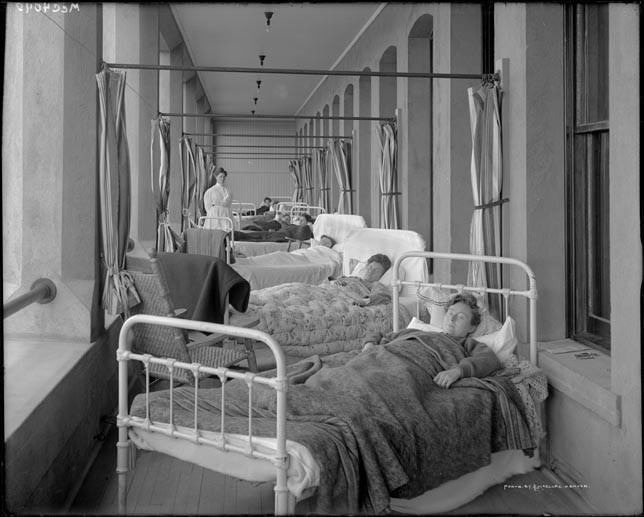
Nurse Kolenda led Ama in through the front door. Ama shivered in the warmth of the building. She was home and not home. She wondered if maybe having been gone for so long, she might never feel like the place was home again. “Can you start at once,” Nurse Kolenda said. Ama nodded. What else could she do? She was in a sort of shock, knowing that her papa and her husband were fighting in the snow and the cold, longing to return to the shadows of her former life, but also feeling somehow as if it were her duty to help the people who had for so many years protected her very existence. “This way,” the nurse said and walked briskly through the building. “We’ll take the tunnels to the women’s ward,” she said. “You’ll need a uniform and then you will help immediately with whatever needs doing.” The nurse paused and turned to face her. “It’s tuberculosis, dear. An epidemic. There is much death here I’m afraid.”
“It is okay,” Ama said softly. It wasn’t the dead that she was afraid of; it was the living. “Let me lead the way.” The nurse seemed to agree. Ama took her place in front of the nurse and walked to the tunnels, returning to the place of her own genesis.
****
Outside, the wind swirled. Kinney’s hands were of ice. He face, ice. And there was a deep almost growl-like sound resonating in his chest. He coughed and spit bright red into the snow. He looked at his hands: red also. His shirt was read, his shoes. When you took a life by force, the body seemed to protest with violence. He was covered in the violence of Kostic’s passing. He’d ripped the soul from Kostic’s body and it showed.
Kinney dipped his hands into the snow and began to scrub his hands. He could not seem to get the red out. At that moment the doors swung open to Building 50. He sniffed the air. He would have Rose soon, he knew. He could feel it.
“Doctor Kinney? Is that you?” He thought it was the behemoth Briggard calling his name but he couldn’t be sure. For some reason Kinney had sunk to his knees in the snow and that growling in his chest became a roar, as if a beast was about to leap free from him. He wanted to tell Briggard to bring him inside so that he could take Rose home with him. He’d pulled Rose from the dead, brought her back in Ama’s form, and he wanted her with him. He tried to explain but he could no longer contain the beast within him. “Oh, dear god,” Briggard said. “You’re sick, doctor.”
But Kinney didn’t hear him. He was coughing too hard. Great spasms of cough. Coughs so raw and deep that a red rose spewed from his mouth and decorated the snow and froze there almost in the amount of time it took for Kinney to pass out into the coldness of night.
TUNNEL VISION: Chapter Fifteen
Tunnel Vision returns...for this week at least.
Chapter Fifteen
Ama clung to Kostic in the truck as the old man drove. He breathed through it. He did not like to be touched but Ama was the exception. Ama was the exception to everything. He could talk to her. See her. Help her. She was, he supposed, the child he might have had once upon a time. He touched her once. Patted her head. “Where are we going, Papa?” she asked him.
The old man Pepperidge spoke to him but kept his eyes on the swirl of white outside. “It’s a bad night, Robert,” he warned.
“I know it’s a bad night, but it’s the best night for this.” Kostic said. The words were a struggle for him.
“Why do you want to go back to the asylum? It’s foolish. Surely my sister would take you back in again. She loves you.”
Robert Kostic clenched his teeth, flexing his muscles as he did. Ama clung ever fiercely to him. He did not like to talk about his mother, nor did he like anyone knowing that the old grounds man was his uncle. Kostic was well enough to know that he was the family’s secret; what they didn’t know was that they were his secret in return. No one knew about them.
The truck lurched on the road, tires locked. “Hold on!” Bill said. His thin arms flexed and spun the wheel. Without thinking, Kostic reached over and with a single hand, wrestled the truck back on the road. The truck swerved, wheels spun, snow swirled, they turned sideways and then came to a stop. “Jesus,” Bill muttered. “If that’s not a sign you shouldn’t go back, I don’t know what is.”
Robert pointed into the snow. The headlights lit a path in front of them that was only inches wide, but even then they could see the dark figure standing in front of them.
Ama began to cry.
“It’s not possible,” Bill said. “He was back at the house.”
Kostic held onto Ama, pulling her close. He knew that not only was it possible, it was predictable. Dr. Elliott Kinney was a demon and everyone knew that demons could fly.
He kissed Ama’s forehead. “Take her home,” he said to his uncle. And then Kostic released her, opened the door, and climbed out of the truck, grabbing the baseball bat that had been resting at his feet.
“Kostic,” Dr. Kinney sneered.
As a form of greeting, Kostic raised the bat and swung.
*****
“What’s happening!” Ama cried. She tried to see what was in front of them but the old man was reversing the truck so quickly that soon her husband and her papa were swallowed whole by the storm.
“Don’t pay attention to them,” he said, his voice loud and piercing. “We’ll be home soon enough.”
Ama tried to stop herself from shaking. It was too much to bear. Too much! She’d left the only home she’d ever had and moved to that horrible room. She’d loved Kinney as her mothers had instructed her, with her body, but he had wanted to possess all of her. He had tried to make her into something she was not. She was not his wife. She was not a Rose. And now there was a child growing within her, a creature with His brain and His soul and she could not stand it. She could not stand it!
“Stop crying,” the old man said. “It’s a helluva drive. A horrible storm. I need to think.”
She tried to swallow the tears. They wedged in her throat. She closed her eyes. If she closed her eyes, she could pretend that none of this was real. She was not on the road in the cold in a storm. She was in her little room with the pictures on the walls and her family around her. She was happy. She was not going to grow a baby. She was a baby herself. She was Ama. Just Ama. And she was loved.
Just then the truck came to a sliding stop. “We’re here,” he said.
Ama opened her eyes. She opened her eyes and smiled. He had taken her home, just as he’d said. Building 50 of the asylum loomed in front of them. “Home!” she breathed and then she was running.
*****
It was more than a storm. It was like being inside a sheet of ice. The wind and snow attacked his skin, tearing at him. Kinney staggered forward. He could feel blood running from his temple and dribbling down his cheek. He could taste the iron in his lips. His only thought now was to trudge forward. He could not feel his body. He was too cold for that. He knew that the asylum was within reach. Behind the gusts of wind, he could see the outline of her in the distance. That’s where he would head.
Forward. One step at a time.
He spared no thoughts of Kostic’s body in the snow. By morning he would be fully covered. And if anyone asked, he could tell them he was attacked. A poor psychiatric doctor attacked by a wayward inmate.
He thought of reaching his wife. Of taking her back to his house and his bed and locking the doors. He was done with work and trying to help mankind. He had plenty of money on which to live. He needed only his wife and the warmth of her body to help him feel alive. He needed no one else.
These were the thoughts in his mind as he walked through the storm.
Just before he entered Building 50, he thought of a reason for the cut on his forehead and his condition. As an after thought, he tossed the knife, the tip frozen in with red and bits of brain matter, into the bushes. Maybe they’d find it in spring when the snow melted. Kinney doubted it. Many things that were covered were never found again.
TUNNEL VISION: Chapter Fourteen
Outside was a blur of white. Kinney stood at the window of his large home and watched the wind whip the snow into giant drifts. The snow covered rocks and benches, deck chairs, the wheelbarrow and eventually Kinney’s very own car. The world was swallowed whole. He returned to the fireplace, a smile spreading coolly across his face. With most of the staff, save Mallie Lyn Peters, away for the holiday, Kinney had his Rose all to himself and no one would be able to interrupt them.
He sat in his favorite green velvet chair and listened to the fire crackle. Rose was upstairs dressing. He’d given her a very special outfit to wear for this evening. One he’d had recreated from photographs. The one Rose…the first Rose had been wearing when she’d…
The fire popped, startling Kinney. He no longer wanted to think of the first Rose and the new Rose. He wanted one wife, one Rose, and he wanted her to be perfect. Tonight, his wife would wear the dress that she’d worn when she’d almost died. Almost. Yes! Almost! Because his wife hadn’t died at all. He hadn’t chased her into the frigid water and held her under until she stopped fighting him. He hadn’t cured her diseased mind with death…but with love. Why even now his Rose, now fully recuperated and looking more perfect than ever, dressed for him in a white gown upstairs.
He imagined her stepping into the gown, her bare legs smooth. He could hear the dress being pulled up over her hips and the image of the white fabric against her smooth skin caused his blood to roil within him. The dress slid over the curves of her hips, over her full breasts. She reached behind her back and tucked the buttons into the loops. Later, Kinney would tear those buttons free, rip the dress from her smooth body, and reclaim all that he had lost.
He heard the footsteps running down the hall. She was running to him! Running to him at last! His Rose! His wife!
And then he heard Mallie crying. It was Mallie, wasn’t it, and not his Rose? Kinney stood and turned to watch Mallie run to the stairs, stumble, and then roll completely down them, her body tumbling as much as a sack of laundry.

There was silence in the house, save for the crackling of the fire, and a great gust of wind outside swirling snow ever closer to the windows trapping them inside. Kinney did not run to Mallie immediately to see if she were all right. He was still processing the words she’d cried right before falling down the stairs: “She’s gone, sir! Rose is gone! He’s taken her!”
Mallie groaned and reached for Kinney.
He spun on his heels and went to fetch his jacket and gloves. The stupid girl could die there for all he cared. There was only one thing for him to do and that was to head to the asylum. He’d thought he could take her away from there, wipe her memory like a chalkboard, and start afresh. She had no idea what happiness lay in front of them and now…Now!
The sleeping beast within Kinney twisted and turned. Kinney took a breath and for the first time in over three years allowed himself to fully feel the rage that lived within him. He would make everyone pay. Everyone. If only they had left him and Rose in peace to live their life quietly. But they hadn’t, had they? No. The world was against him. It had always been against him.
Kinney swung open the door and ran into the white. It took only moments for him to leave the house and Mallie’s cries far behind him.
TUNNEL VISION - Chapter 13
Letter to Dr. Elliott Kinney
Dear Dr. Kinney:
TheBoard of the Northern Michigan Insane Asylum accepts your request for personal time off. The transition from physician in a hospital for the body to an institution devoted to illnesses of the mind is a difficult one. We have reviewed your log sheets and have discovered that for the past few months you have worked approximately sixty hours a week, an exhausting load for any professional. We have agreed to grant you the holidays off with pay. You are asked to return to the Asylum on February 1, 1933. At that time we hope you will resume your duties to the patients that have so come to rely on you.
From the Record Eagle
December 27, 1932
…According to the State of Michigan Health Department, the rate of new tuberculosis cases is on the rise. While not officially an epidemic, the disease is spreading at an alarming rate. The Northern Michigan Insane Asylum has donated one of the wings of the institution to offset Munson hospital’s overburdened facility. If you or a loved on develops symptoms common to tuberculosis, please seek medical treatment at the asylum at once. It is a closed ward and will allow you to fully recuperate and lessen the chances of spreading the disease.
*****
Ama placed her hand over the curve of her abdomen. She could no longer fit into the dresses her husband had given her. For Kinney called himself her husband and it was how she thought of him. She thought she could remember their wedding on the shore of Lake Superior. No. Michigan. Lake Michigan. And the wind was warm and the waves were gentle and the sun shone as if blessing them with good fortune.
There was something not right though. Ama sat in a chair and breathed heavily. She could no longer inhale and make her stomach flat. It would not flatten. She wasn’t sure what was happening to her, but felt perhaps it was like the stories her….who? Who told her? She vaguely remembered hearing her papa tell her about demons and the fight against evil and the other papa drawing pictures on her walls. But that wasn’t right. It couldn’t be right. A girl didn’t have two papas. She had one. And her father’s name was Edward and her mother’s name was…Lucy…and her name was Rose.
At that moment something within her stomach fluttered and she became aware of the creature inside her.

*****
Mallie Lyn Peters was in the kitchen when she heard Mrs. Kinney screaming. She thought of her now as Mrs. Kinney as it was so much easier than Rose or Ama or whomever the doctor wanted to believe she was. “I don’t know that I agree with his experiments” she’d thought to herself over and over. At the same time, they didn’t seem to do harm exactly. It’s just that the woman who he claimed as his wife had started out so wild and raw and beautiful in a way. Now, she was like so many of the doctors’ wives. Pale and timid and as tremulous as a butterfly. This wouldn’t happen to her, Mallie assured herself. When George finally asked her to marry him (for surely he would) she wouldn’t lose an ounce of who she was to him. Not one ounce.
She abandoned these thoughts along with the slice of cake she was eating and ran up the long stairs to attend to the mistress. “Madam! Madam Kinney? Are you all right in there? May I come in, ma’am?” Mallie hesitated at the door. There was, of course, no lock on it and she could certainly enter it of her will, but she didn’t want to upset the doctor if he found out. She placed her ear to the door and confirmed that the Mistress inside was crying. Mallie opened the door gently and then just as gently closed the door behind her. Mrs. Kinney stood in front of her, naked, and achingly beautiful. Her long dark hair fell over her shoulders and touched the top of her heavy breasts, for they were heavy and Mallie noted at once the curve of the woman’s abdomen.
“What is wrong with me?” Mrs. Kinney asked in a shaking voice. “There’s a creature…” she whispered.
“A creature?” Mallie felt a deep sadness penetrate her heart. She’d really thought that Mrs. Kinney was well. That somehow she’d managed to avoid the illnesses that floated in the asylum like a mist.
“A creature! Here!” And she pointed to her stomach.
It took Mallie a moment to understand. “Why…Ma’am, don’t you know? That’s not a creature but a child you’re expecting. You’ve got an angel growing inside you, you do.” Mallie smiled warmly at the woman and reached for her robe. She draped it tenderly across the woman’s shoulders. She seemed to flinch at the touch and then relaxed into the comfort of the robe. “Ma’am, sit down. Please. I’ll get you something to eat. You’ve got to eat more when you’re eating for two.”
Mrs. Kinney sat on the side of her bed. She did not acknowledge Mallie, but turned instead to look out the window. Outside it was swirling white: a blizzard. “A child,” she said as Mallie left the room. Mallie wasn’t sure if she’d said the word with hope or with fear.
****
Inside the asylum, chaos swirled. White sheets flapped as orderlies made beds, moved equipment, set up screens between the beds, then abandoned doing so when they ran out of both. The coughing could be heard even outside the ward. At first men and women were separated, but within a week the ward was filled with both sexes. They lay on cots, sat in chairs. The coughing became a chorus and blood sprinkled. Fevers spiked and nurses ran from bed to bed tending the sick. There was running. Cries of pain. Screams pleading to be released. The Superintendent stood at the entrance to the ward, watching the chaos rise and crash like waves. “You are here for your own good!” called Christopher Grooms. “For the value of society! You are here to heal!”
To that, a frail woman with stringy blond hair said “We are here to die.”
“I don’t know what to do,” the head nurse said to him. “We don’t have any more beds left, sir. We don’t have the staff to support this. Tell the city we cannot…”
Mr. Grooms stopped her with a glance. “You have no concept at all with what we’re dealing with. The state has offered us money, real money and…” He breathed heavily. “Take over Ward C. Combine the three levels of asylum patients into one area except for the highest paying ones. Let them continue to have their space until we can figure out something for them. Call in all support staff and physicians that are on vacation. We will ride this out. It’s only an epidemic. Epidemics pass.” He did not finish the sentence but the nurse understood. Epidemics passed when everyone died.
It was during this conversation when an inmate disappeared from the asylum. Robert Kostic was no longer in solitary. No longer in the Men’s Ward. The orderlies assumed he’d been sent to the TB ward, and the TB ward no longer cared who entered. They only recorded how many they were treating to secure funds from the state. And so, Kostic slipped quietly out of the asylum and straight into the brewing storm.
TUNNEL VISION: Chapter 12
Kinney has a bad dream and realizes it's a memory; inmate Kostic makes a significant decision.
Kinney dreamed of walking on the beach of Grand Haven with his Rose, his first Rose. She ran ahead of him, laughing, but it was a laugh of pure hysteria. “You can’t catch me!” she called to him. He ran. It was November and the lake had not cooled enough yet. By January entire waves would be frozen mid-crash, but now, the water was simply as cool as ice but still a liquid. Rose ran, her dress pressing against her body. It began to drizzle. Kinney felt his lungs expand and his heart beat. He had to catch her! He had to.
And then he did. She turned to look at him and her bare foot caught the sand. She did not fall as much as fly, landing face down in the sand.
“You are a foolish, foolish woman,” he said to her. “Stand up! Stand up at once!” She refused. He did not think, but reacted, allowing his hand to fly through the cool air and smack her with such force that electricity jolted through him. She stopped laughing at once.
“Do it again,” she said.
And he did. And then something strange happened to Kinney. A deep, residing anger uncoiled within him and he was hitting her, shaking her, forcing her to the ground. He lifted her dress, pushed himself between her legs and then…
It was over in moments.
He pulled back, looked at his hands that were not his hands, looked around the beach to see if anyone had seen his monstrous act.
“Who’s the crazy one now?” Rose asked him. “It isn’t me, Elliott. It’s you. It’s you! You! You! You!”
He longed to throw her into the water, hold her head beneath cool surface. Instead he got to his feet and walked away, leaving her in the sand, an abandoned doll.
Kinney woke with a start. He was in her room. In Rose’s room, his new Rose. She was asleep beside him breathing heavily. He felt his fingers tingling with electricity again, and that familiar sleeping anger within him began to roil.
Things were not moving fast enough. He needed more time with her. If he did more memory exercises, more actively tried to wash her mind free of her own history, he would have his wife back to him, only this time she would be perfect. He thought of the things he hadn’t tried: more aggressive therapies, hypnosis, reshaping her personality through discipline. There was so much to do! So much to do! First, he would put in a leave of absence at the asylum. He would devote all his time to creating the perfect wife, one who would not laugh at him or taunt him.
Kinney reached for her bare shoulder, drew his fingers across her skin.
Then suddenly realized that the episode on the beach with Rose hadn’t been a dream at all, but a memory.
******

In the halls of the asylum, a storm was brewing. It began with a whisper: “Kinney took Ama” and was repeated and repeated until the syllables slurred. The words drifted through the staff at Building 50, the three floors of the women’s ward, and finally slithered under the locked doors of the men’s ward, pouncing on Robert Kostic’s chest. He was twisting in bed, writhing as if being attacked by tiny knives. Ama was gone. Cut. Kinney had taken her. Slice. Kinney was not coming back. Stab.
Kostic bolted awake.
Though the drugs of his ‘therapy’ pulled at him, he shook his head as if he could shake free of their grasp. Whatever it took, whatever face he needed to wear to convince the foolish doctors that he was normal, he would do. What was normal anyway? Find out how a doctor understood normal, and be that for them. Change for another doctor.
Kostic silently stepped out of bed, touching the cold floor with his bare feet. He was in solitary for a few more days he knew. Though he couldn’t actually hear the men in the ward breathing in their sleep, he felt the rise and fall of their lungs. He bent to the floor, placed his hands flat against it, and pushed. He would do pushups until his muscles bulged and burned. And then he would run in place. And then he would box. He would be ready for what was coming.
He sent a whisper back through the corridor, knowing the words would eventually find Kinney: “I’m coming for you,” he said.
The words took flight.
TUNNEL VISION Chapter 11
Dr. Kinney loves his new routine with Ama/Rose. Mallie Lynn Peters starts to notice that something is wrong. And we get a sense that Ama is not entirely as happy as she seems.
December 18, 1933
To
Mrs. Johnson, Housekeeper
Mallie Lyn Peters, Attending Nurse
Eleanor Koepp, Tutor
Rose’s schedule is to be followed every day, consistently, for the next three months. Routine will help eradicate her previous experiences. In routine, she will find comfort and freedom. Miss Peters will attend to Rose when she is available; all other times Mrs. Johnson will see that she stays on schedule. Miss Koepp will maintain charge during her scheduled times. She is to keep to her own room at all other times. Excursions into town are allowed with written permission.
5:30AM Rise from bed and ablutions
6:00AM Breakfast of porridge, meat, various fruit
7:00AM Morning walk
7:30AM Tutor arrives and gives lessons in literature, basic mathematics, housekeeping, cooking, manners
11:00AM Lunch with tutor
12:00PM Afternoon walk
12:30PM Afternoon memory exercises. Use repetition of provided memories to replace those of her childhood. Begin with page 1, early childhood, and do not move forward until I deem necessary.
4:00PM Rest. Time may be filled with needlework, painting, gardening and other calming activities.
6:00PM I arrive back from the asylum and will join Rose for dinner. She is to wear one of her three finest dresses.
7:00PM Memory exercises with me begin promptly. Do not disturb us.
10:00PM Bedtime.
-Doctor Elliott Kinney-

Kinney’s new life glowed. It virtually glowed! He found such excitement in his work now that he had a home and purpose again. At the asylum, there was a softness about him, and his endless coughing and colds had subsided. He was less apt to prescribe hydrotherapy for misbehaving patients and more willing to give them a second chance. He began talking at the dinner table with his colleagues and the board on the nights he was required to stay. All other times he flew through his day and followed his checklist. He saw patients, he prescribed, he monitored, he read the most recent research. And at night, Bill Pepperidge drove him the short distance to his new home, a lovely home surrounded by woods and on a hill overlooking the bay. With every moment he drew closer to his home, his heart beat a little bit faster. And of his long days, he did not fully breathe until they pulled up to the house with the dining room illuminated from within. He had to stop himself from running up the stairs because he knew that she was waiting for him.
He liked her in the red dress best. A red dress for his dear Rose.
Before entering the dining room, he took a calming breath, gathered his wits, and turned the doorknob. There she was, waiting. Candles lit, their meal prepared for them, looking so beautiful with her waves of shadow dark hair. She turned to him and smiled and said the words he’d been practicing with her. The words that at first had sounded hollow and unfeeling, but with continued repetition took on new meaning. It was so simple, really! You could give anyone a new memory or meaning if you simply repeated it long enough…and tonight…tonight…she said the words for the first time. “Hello, husband. Welcome home.”
Kinney stopped and stared at her. A dark curl had fallen across her eye. She looked at him, her smile firmly in place. Firm. Cold. He reached for her, pressed his lips to hers. “Hello, Rose,” he said. “Very well done. Next time, kiss me back.”
Rose nodded. He patted her shoulder and then moved to sit across from her. They would eat dinner in silence as she did not have the skills yet to carry on the right conversation, a conversation he might have had with his first Rose. Through repetition, she would finally get it right, and then, and then…well. He smiled to himself and reached for the roasted pork. They would begin practicing the next phase tonight. First, he would teach her how to kiss him back, and then all the right things she should say.
He thinly sliced the pork and placed a piece on Rose’s plate. They ate in silence, save their silverware scraping on the china.
***************
Mallie Lyn Peters watched from the kitchen door, cracked open slightly. A sliver of light fell across her eye, but from a distance she would be invisible. And Kinney paid her no mind any way. He was too focused on his dinner with Ama.
Mallie’s new life was a curious existence. She worked at the asylum during the day and things ran as normal as usual. She rarely saw George any more as with Ama gone there was no more need to meet each other in the tunnels. She missed him, but she did not miss the way George eyed Ama. That morning, though, she’d run to the kitchen where he was loading in wood and had given him a jar of preserves. “Why, thank you, Mallie…” he’d said, and then quickly added, “Miss Peters.”
“It’s my pleasure, Mr. Young. I made them myself I did. From spring rhubarb,” she’d returned, blushing to her toes. She replayed that conversation over and over.
Months ago she would’ve gone home to her mother and siblings after her work at the asylum was done. Now she had a room of her own in this expansive house with Doctor Kinney and Ama. Rose. She wasn’t sure what he wanted to call her (or why) and so mostly she avoided using her name at all.
In her work at the asylum, Mallie had been witness to, and an accomplice, in many of the therapies given. She’d strapped patients down while they were administered remedies. She’d seen seizures that rattled brains. Once, an inmate had bitten off her own tongue in an effort to remain silent. Horrible things. And the therapies never really seemed to help. Mallie believed, secretly, that many of the patients were beyond help. It wasn’t just the feeble-minded ones, the ones where their physical deformities were so apparent. There were others whose souls were fractured, and a few who possessed no soul at all. Mallie wasn’t sure if Ama could be healed, because she hadn’t yet figured out what was wrong with her. So Mallie watched secretly. She observed just as she did at the asylum.
Kinney moved to sit next to Ama. “Rose,” he said. When Ama did not look up at him, he said her name again, but this time there was an edge to his voice. “Rose!”
She looked at him. Mallie could not see her expression, but she felt anger pouring off the girl. “I want to tell you a story about how we met.”
“We met at my home,” she said. “I came to you one night and I took you.”
“No. You did not. That’s a dream, Rose. A dream. We met on the shores of Lake Michigan, in Grand Haven. We were both vacationing with our families at the same resort. You stood in the water, your dress lifted to your knees. And do you remember what happened next?”
She did not answer.
“There was a great undertow and when the waves crashed in, you lost your footing and…”
“I fell?” Ama asked softly.
Kinney nodded, apparently pleased. “You fell. I was walking by at that moment and I ran into the water to rescue you.”
“You rescued me. I fell in the water.”
“It was cold. Freezing. I carried you out of the water and you were…”
“Shivering.”
Kinney nodded again. “Shivering. And you said…”
“It’s like the lake wanted me to swallow me whole.”
“And I said, you must take more care. And you looked at me, Rose, you looked at me and said…”
“If I had taken care, I wouldn’t be in your arms right now. I rather like being in your arms right now.” Ama looked directly at Kinney now and smiled, a smile that lit her face and seemed to illuminate her beauty. “I’m Rose,” she said to the doctor.
Kinney nodded and Mallie wondered if his expression were, indeed, one of pleasure. “And I am Elliott Kinney,” he said and then shook Rose’s hand. Mallie would think of her as Rose now. She could see that was what the doctor wanted. He wanted everyone to believe she was someone else.
Mallie drew away from the kitchen door, let it close silently. She’d seen them rehearse this scene over and over. What was the point? Could Ama actually believe that this was her memory? She seemed to. But why? What kind of healing could false thoughts do for a person?
She did not want to think about it. She did not want to question what was going on in this house or about to go on in this house. She wanted her pay and to help her family and she wanted, most of all, she wanted Charlie Young to herself.
********
Ama was empty. Empty. In her room at night in the doctor’s house she could close her eyes and be in the comforting shadows of her childhood home. She missed the pictures papa Tim had drawn for her. She wanted papa Robert to come to her and practice swordplay. She wanted mama Liliana and Lynnie to sing her to sleep. This time though, when she called for them, they did not come. No one came, save the doctor. And so she stopped calling.
She missed the sound of water dripping in the tunnels. Missed running her hands across the surface of the brick. Missed running as fast as she could through the curving underground passage. She knew it so well she could run with her eyes closed with no fear of tripping. And when the asylum slept, she explored. She played.
She was, contrary to what Kinney suspected, not at all a blank slate. She knew of the world and she knew where her family slept at night. She knew that they had trouble in The Outside World and had come to the Asylum because they could not live anywhere else. She knew not to mention potatoes to papa Robert. She knew to never approach mama Liliana from behind. She knew that her family was different and she did not care. She did not yearn for anything other than what she had. What needs did she have? She had a loving home and adventures. And as she grew older, Liliana and mama Lynnie explained to her the peculiar hunger that grew within her and how she could quiet it down with using a man.
Kinney was not her first lover. She’d taken them before, in the darkest of nights, sometimes only once, sometimes repeatedly. They thought of her as a ghost or a hallucination. She liked it that way. With Kinney, though, she had felt something different. Hey looked at her differently than the others. There was a hint of fierceness in his wanting of her. If only Ama had figured it out earlier the way she had with the other inmates of the asylum.
Growing up within its walls, at night she had explored the belly of the hospital…and over time, she had grown to know the inmates. She could sneak into their wards at night. She told stories. She danced. She sang. And they loved her. She never feared for her safety because her family watched out for her. And before approaching an inmate, Ama studied them. She watched them. She could feel how they were broken and as one would avoid touching a wound when trying to heal it, Ama avoided those broken parts of their spirits. You could read a person’s emotions from the words their body spoke. How the body tensed or relaxed, how a face contracted or pinched, how eyes flashed at you with humor or menace. Ama had a talent to calm and connect. To heal. After their treatments, Ama would go to them, touch their foreheads, and they looked up at her and found comfort.
Her one mistake was that she had not taken enough time to observe Kinney. She had wanted that peculiar closeness with him, to take pleasure from him, and she had taken him wildly. But she should have noted that flash in his eyes.
Like everyone else at the asylum, Kinney was broken. And he was the first person that Ama had met where she could not figure out which wounds to avoid in order to heal him.
And so, in her new room and new life, she waited. She closed her eyes. She sang softly to herself and dreamed of running in the tunnels. For now, she would give Kinney everything he wanted. She would control the language of her body. But when she finally figured out the cracks in his spirit, when she knew the answer to what ailed him, then, and only then would she take action.
She was happy here for a time, but had no doubt that she would return to her family. She served a greater purpose at the asylum. She was their secret. Their dark angel. And she loved them with all her might.
*********
TUNNEL VISION - Chapter 10
Tunnel Vision continues. Doctor Kinney takes Ama away from her home and family. Probably not a good thing.
PART TWO
Chapter Ten
The Tunnels of the Northern Michigan Insane Asylum, 1911
Dark. Cold. Aboveground the world was caught in a fierce storm as the gales rushed through the bay, broke ships like teacups onto the shore. The wind howled. Moaned. Tore through woods. Shook trees to the roots, lifted roofs and spun an outhouse up by Kids’ Creek.
In the tunnels, all was quiet.
And then there was a panting. A slight humming. No light. Just darkness and shadows blending. You could not see her if you were looking. She was quiet as a secret. Husssshhhhh. She thought over and over. Husssshhhhh. Her fingers to her lips. Even as her belly grew, she guarded her secret fiercely. She was a feral dog and her growing secret a bone. In some corner of her mind, she knew what was happening. She was one person becoming two. She did not associate it with the animal functions she’d done countless of times with men. At her house, in the woods, in the doctor’s office, and one night down in the tunnels itself. An orderly he’d been and he’d been nice to her. He gave hear a pearl button. She kept it under her tongue to keep it a secret as well.
He had shown her how to crawl down in to the tunnels and he had met her here countless times to grunt and paw at her, to nuzzle her like a dog. To lick and pant and eventually to give her pleasure in a way different than the button. The button at least she could keep. And then he was gone. Fired. Let go. Moved on with his wife and children. She did not know. She did not understand. She understood secrets. She understood Hussshhh. She understood how to be very, very quiet even when under incredible pain. She could be completely quiet. In fact, she never said a word.
And so when the child emerged from between her legs, the woman did not cry out or scream. Her daughter entered a world of secrets and silence. Only aboveground did the world cry out and moan.
Northern Michigan Insane Asylum, Building 50, 1933

Bill Pepperidge pulled his truck up to Building 50 just as Kinney had asked, at precisely 9:00PM. Course, to Bill, 9:00PM was a strange time to make a move, and in December no less, when the nighttime wind had a real bite to it. If Bill had a place to move into, he’d wait until spring to do it. Course, if Bill had a place like the doctor, maybe he’d make the move right away too. He looked around, noted Kinney standing in front of the door. He noted that the doctor stood still, but there was an air of unrest to him. Bill nodded to himself. So much darkness and only more darkness to come.
“Seems you’ve collected some things there, doctor,” Bill said. “I remember just a few months ago driving you up here and you had naught but one bag with you then. How’d you manage to get all this?” He motioned to the stacks of bags behind him, luggage and what not.
“I’ve ordered some things for the new house,” Kinney said in a way that seemed to say that was the end of the discussion. Pepperidge tugged on his hat, nodded, and lifted the rest of the bags into the back of his truck. The bed sighed with the weight, just the way the Bill’s own bones were sighing now. He’d worked too hard and too long and there was no end in sight. Not with all the folks out of work and the dust bowl happening in the south. If there was one thing Bill knew it was that as a hired hand there were times where it served you to remain quiet and stupid. This was one of those times.
He didn’t look at the woman, or he tried not to. The little Irish girl had brought her out, wrapped her in a big blanket. The young woman was beautiful and clearly terrified out of her skin. She looked around as if she’d never seen a night sky. Course, if she was a loony (and she certainly looked like a loony) maybe everything was always new to her. Sometimes the mind was broken that way. Bill took this in without appearing to notice a thing. He’d worked at the asylum a long time. There were certain skills a man developed over time and this was one of them.
He didn’t even acknowledge her presence as Kinney pried her free from the Irish girl’s embrace. He took the frightened woman by the elbow guided her into the truck. She seemed to not know what to do exactly. Not how to get up into it or what to expect. Kinney had to lift her into the truck and when he took the seat next to her, she seemed to try to crawl inside Kinney’s own body. He held her.
Bill climbed in to. Didn’t have to worry about touching her as she was so close to the doctor. “We ready?” Bill asked and the doctor nodded his head. The woman near jumped out of her dress at the sound of the engine coming to, but Bill knew better than to ask.
Truth be told other doctors had taken lovers just as it appeared Kinney was doing. There was a fair share of loose women in the asylum, Bill knew, and sometimes they ended up as housemaids at cottages for a time. And sometimes they weren’t heard of ever again. It didn’t matter to Bill. It seemed that the women went willingly enough. Shoot, some of the women were so feeble minded they didn’t know up from down. Maybe staying with one of the doctors gave them a little bit more comfort for a time. What mattered to Bill was that he have money to put food on the table for his wife and four kids and grandchild. Sometimes, you just had to close your eyes to things.
It took a lot for Bill to drive to the doctor’s new residence in silence, but he did it. And he was rewarded handsomely for it too.
* * * * *
To Ama, the outside world was filled with scents and sounds she did not understand. There were no walls to keep her secure, no loving family to hold her. She tried to press close to Doctor Kinney but she felt no warmth there. She wanted her papas, her mammas. The world breathed ice on her face and it hurt. She wanted the shadows of her underground, not the great dark ceiling above her. She wanted her woodland creatures and her music and her box of special things. She did not understand what was happening or how they were sitting and moving so fast. The world was so loud, so loud and she pressed her hands to her ears to drown out the sound, but still it seeped in. She felt herself begin to cry. It started in the depths of her stomach, where her deepest pain resided. She felt the tears and anger forming and she let it pour out.
The Doctor held her. “Hussshhhh,” he said. Just that. “Hussshhh.” And Ama stilled. It was a magic word, a word that meant be quiet or they will find you. It was a word from her childhood and her growing years. It was a word almost as close as the name she had chosen for herself. Hussshhh. She closed her eyes. She let herself be rocked to and fro, the way Liliana would hold her and sing to her.
And then, after a time, the sounds and motion stopped. Kinney took her hand and helped her reach the ground. “This is your home, Rose,” he said to her.
Ama looked around. She knew that Kinney called her “Rose” and sometimes she answered to it. It was so dark out that the world now seemed smaller and that was a comfort. “Say, thank you dear Kinney.” His voice was a needle.
Ama closed her eyes. Her family had warned her of this moment, when she would be discovered and taken from them. She knew this could happen. She also knew that though she felt alone, she was not. They had taught her many things, ways to defend herself, weapons to use in case of danger. She would be able to use all their warnings and protect herself. “Thank you dear Kinney,” Ama said evenly. She smiled at him.
The first weapon was to make them believe you. Make them believe you would give them what they wanted. Ama could do that. She was a very talented girl.
Kinney led her into the house and out of the darkness. Ama continued to smile even as the light in the house blinded her.
The second weapon was to remember everything they did to you. Remember. Remember. Remember. Ama’s eyes were open now. Very wide open, indeed.

Tunnel Vision (The Summary & Backstory)
A little backstory on "Tunnel Vision"
In the early days of summer, I asked for help deciding what kind of novel I was going to write next. My three novels are all romantic comedies. Did my readers choose for me to write another romantic comedy? No. No they did not. They wanted to challenge me and voted for a Gothic Suspense Historical novel. Holy expletive.
I thought about it for a while and decided to go back to my roots: an insane asylum.
Let me explain. So I grew up in Traverse City, Michigan with my house two blocks from the bay. I could hear the waves on the water and when storms rolled in, my house shook. My mom was as single mom and worked as an arts and crafts advisor for a place called "The Friendship Center", a mental health care nonprofit that helped people with emotional or physical disabilities. Most of them lived in foster homes as the psychiatric hospitals had all shut down. Some were very functional, and some had sever psychoses. From the age of seven, I spent a lot of time at my mom's work and I even 'volunteered'. On a week long summer camp, I was there with all the campers. I poured their orange juice for when they had to take pills...three times a day. I met people with epilepsy, schizophrenia, bipolar disorder, OCD, and people whose minds were blank from too much drug use. It sounds scary, but as a kid it wasn't. They were just kids in adult bodies...and I felt cool because I was smarter than most of them. A horrible thing to say, but that's what it was like.
10 years later, my mom worked part-time at the Traverse City State Mental Hospital. It was being refurbished and was no longer a hospital. She took me on a tour of the tunnels and the grounds and told me a story that there was a child born in the tunnels and raised by 'inmates'. It was just a rumor, she said. The story, the tour, and my experience with the mentally ill has stayed with me.
This is the genesis for "Tunnel Vision". It is 1933 and Doctor Kinney arrives to the Northern Michigan Insane Asylum (as it was called then) to start a new job. He is mourning the loss of his wife and he has dark secrets. We meet interesting characters and a vast tunnel system. After exploring the tunnels, Kinney thinks he sees his dead wife. It is not his wife at all but a woman named "Ama". Ama exists and doesn't exist. She was born to an inmate in the tunnels and cared for by a collection of people. She knows no past or future, only present. She knows nothing of the outside world. She is passionate and kind and fierce, and Kinney decides to own her. She is such a blank slate that Kinney believes maybe, just maybe, he can reshape her. Give her some memories of his wife's, make her act and talk like his wife. In this way, he can raise the dead. He takes Ama away from the asylum and is joined by a nurse, Mallie Lyn Peters. He is going to experiment with mind control.
There's a parallel story of a young woman in the 50's looking into her past.
That's where we're at now. I'll tell you, there are a lot of issues with it. There isn't enough dialogue and I didn't flesh out the supporting characters. I'm making weird choices that are confusing at times. So...read with caution. You are reading a rough draft. A first draft actually. I write it, look for typos and post it. I'll be re-writing extensively in the future. If you want to see how a novel develops, keep reading. And thanks for taking the time.
Best,
Tanya
TUNNEL VISION--Chapter 9--Planning
Beth begins to discover what a monster really is; Kinney begins planning the transformation of Ama with a little help from Mallie Lyn Peters.
Chapter Nine
“There are two people in this room, Doctor. One is sane. One is as crazy as they come. I assure you, sir, I am sane. So which one are you?”
-Handwritten note addressed to Dr. Kinney and marked PRIVATE
Second Street, Traverse City, 1952
My head throbs. My body aches. I feel as if every muscle has been straining to grasp something it cannot reach. Maybe it was the conversation with my mother. Your father, she began and then she said, Charlie…She paused here and her eyes filled with tears. I think, perhaps, mine did too. No longer was he simply my father; she had to specify that she meant her husband and the man that raised me. She continued, Charlie and I met because of Ama. She was raised in the tunnels, you see. Charlie had been bringing her food secretly for sometime and the others…
I slip my hands in the hot, sudsy water and grab a glass and begin to scrub.
The others, she said, raised her.
The glass in my hand is a fragile bird. I scrub. I said, but if Dad knew she was there…why didn’t he rescue her?
My mother looked at me and sighed. She was tired. She did not want to discuss this with me anymore. Her words were heavy with fatigue. Who would rescue her, Beth? A ten-year-old girl, raised by lunatics? Where would she go? Who would take that risk? Charlie was raised in an orphanage. He has the scars to prove it. And if you saw her…if you knew her…I met her when she was seventeen. We were the same age. I was jealous of her, of how Charlie would bring her things…ribbons, a slice of bread, a jewelry box. And so I started bringing things too. I think maybe she wanted him, but she could not go to the surface then and I could. And of course, Doctor Kinney arrived shortly after that. After that, everything was decided.
What was decided? I asked.
You. Ama. Rose. Me.
I say the four words as I scrub a glass and when the glass snaps in my hand, I don’t feel a thing. Not until I see the water beneath the suds and the swirl of red do I realize that anything is wrong. I call for Ray but he is not home. He never seems to be home anymore.
I pull my hand from the water and it seems to pulse blood directly from my heart. There’s a towel and I wrap it tightly across the gash in my hand. If I cannot get the bleeding to stop, I will call my neighbor Katy to help me. I will crawl to her if I need to. It’s not the loss of my own blood I fear, but my child’s.
For now, I slide down against the cabinets and sit on the floor.
I breathe.
You. Ama. Rose. Me. I repeat it. It’s a refrain. A dirge. The sound of a glass shattering.
What did you do to us? I ask the air. I ask Kinney. I ask the man who was my real father, and yet a man I feel nothing but contempt for. He doesn’t answer. He is not here either.
***
Northern Michigan Insane Asylum, 1933
“Mallie, I’d like you to assist me with a few things,” Kinney said to the young nurse. She stood in the doorway to his office and looked behind her as if to see if anyone were watching. “It’s perfectly above board,” Kinney said. “You have nothing to fear from me. Please come in and shut the door.”
“It’s just that…if you forgive sir, there have been doctors, sir, who…” she fumbled with her apron, twisted it with her fingers.
“I’m aware of the rumors. Do not fear. I have nothing but a professional interest in you. In fact, I have a proposition for you.” Mallie seemed to let that register. She entered the office and shut the door, though she stayed close to it, Kinney was sure so that she could escape if needed.
“You have a proposition, sir?”
“Tell me, has your family been struck by the wave of job losses?” Kinney knew the answer to this. Most of the country was under a serious economic crisis. Even now the asylum was filling with the deranged that family members could no longer support. He could surmise that Mallie’s family was having trouble, but he did not need to surmise at all. He knew that Mallie Lyn Peters lived with her single mother and four siblings. He knew that her mother mended patients’ uniforms. Harvey Biggart himself brought great stacks of uniforms for her to fix. He also knew that she had lost quite a bit of work lately because Kinney had quietly seen to it to find another seamstress.
Mallie Lyn’s face flushed red and she nodded. “Yes,” she said.
Kinney nodded, once. “I have a special job for you, one that you will be well compensated for. One that will require some additional time from you on your day off, and perhaps at night. You will be safe, I assure you. I have no interest in you of a physical nature, I assure you. I simply need a nurse to help me at my new house.”
“Your new house, sir?” She looked up at him.
“I have purchased a home not far from here, on the shore of the bay. I have, of course, decided to keep my appointment here at the asylum. You will assist me with some…” Kinney paused here as he searched for the word. “…experiments if you will. A new method in healing the sick. We will start with one patient.”
“One, sir?” Mallie asked softly.
“Just one. And Mallie, if you assist me, perhaps I can send some more work to your mother and your young siblings.” He saw her eyes flash then and he could not be certain if it were from gratefulness or if she guessed how much of her family’s fate he truly held in his palms.
“Of course, sir. Whatever you need, sir.” She curtsied. “Just a question, sir. Who is the patient?”
Kinney walked to the window to hide his grin. “Ama,” he said. “But from now on we will call her Patient Rose.”
Mallie’s reaction was not what he’d expected. He’d expected her to harangue him, to fight. But she said with a voice that now had more strength in it, “Oh, yes, Doctor Kinney. I would be happy to take Ama away from here. To take…Rose. And watch over her, I mean, and help you with whatever experiments you need. No one need know. She doesn’t really belong here anyway.”
This time when Kinney turned to her, he did not hide his grin. It seemed that Mallie Lyn and he had a perfect understanding. “We will begin at once,” he said. “I am moving my things to the house tonight.”
“Tonight, sir,” she said, and she smiled at him in return.
***
Traverse City, 1952
I sit in the rocking chair and rock. I rock to the pulsing in my hand, to keep the sound of Ray’s voice from touching me. “What a fucking stupid thing to do, Beth! How could you cut yourself! Are you a child? Do you need someone here to watch you? I had to take work off. I lost a day’s pay. A day’s pay!” He goes on and on. I rock. I focus on the color of Ray’s hands, stained deep and forever with the cherries he cans. He smells of the factory, sweet.
I tell him I’m sorry. I tell him it was an accident. I tell him it will never happen again. I talk to him and while my mouth moves and say words, my mind is very far away. Back in the asylum my father took my mother from the only home and family she ever knew. How did he do it? How did her family react? I do think of them as her family, the inmates. They loved her, didn’t they? And isn’t that what family is? People who love you?
I have their pictures: Liliana with the long dark hair. The albino man, Timothy Beeler. The crazed and fierce looking Kostic. The old woman Lynnie. It is their voices I hear now, not Ray’s. They say the words I want to say.
Stop! What are you doing? How can you take her? She is ours ours ours. Ama! Ama! They cry.
They cry.
They are grabbed and thrown in cells. My father prescribes new therapies. They inject Liliana with insulin to trigger a coma. For Robert Kostic, it’s massive doses of barbiturates to control him and he sleeps the sleep of the dead. They lock Timothy in a room where he cannot paint or draw. And old Lynnie they treat by holding her food, and feeding her only broth. And later, there’s a new technique, electroshock therapy, and I see their bodies vibrating and bouncing and I see the foam forming in their mouths.
In my rocking chair, I imagine Ray doing the same to me. Shocking my system, only it is with words. Stupid, useless, ridiculous, selfish. Why I ever married you I’ll never know.
He’s chipping away at me. At the very core of me. I feel my self slip away under the cold water.
This, too, is what my father did to my mother. She may have started out as Ama, but she became Rose.
The question I have now is who, exactly, will I become?
TUNNEL VISION-Chapter 8-Observing
Doctor Kinney observes the inmates in Ama's life so that, like a cancer, he may cut them out.
Chapter Eight
In the morning Kinney awoke to the emptiness of the bed and his room, and the awareness that to accomplish his goal, he would need to take steps. First steps began with the ritual of shaving. Cold water, lathering the soap in the cup, dragging the straight blade down the sharp curve of his jaw. Just a touch of blood. Never mind. There was always a scratch or two when preparing to greet the world. And then the dressing: under garments, starched shirt, dark dress pants, shoes polished to a dark mirror. He smoothed pomade in his hair until every hair lay perfectly in place. And then he began his morning routine, or what had become his morning routine. He did not go to the dining hall for coffee and food to be spooned upon a platter for him. He went quietly down into the tunnels. He too could have a secret hiding spot. Kinney, you see, was a quick learner.
As a doctor Kinney had realized early on that before taking any precipitous steps with a patient, he must observe quietly first. Only after hours of observation, could he (as one would cut out a cancerous growth) know exactly how to remove the cause of his suffering. For Kinney suffered now. Every moment when Rose was not with him (for he thought of Ama entirely as his Rose now) he suffered gravely. He was losing weight, the sharp blades of his bones becoming yet more pronounced. He coughed more and at times had such trouble breathing he feared he’d pass out. When Rose was with him all signs of his illness abated. He was well. And so he must figure out a way to remove Rose from the darkness of the tunnels and take her into the light of his own life.
From the shadows he observed. This morning Rose was tended to by the albino, Beeler. The four inmates seemed to exhibit vastly different psychoses and on their own could barely tend to themselves, let alone take care of a child. Collectively, he noted, it was a different story entirely. They seemed to help each other. To communicate with one another. Where one patient had a weakness, another had strengths. The albino did not talk. It was either a self-imposed silence or perhaps his albinism was only one tendril of deeper malformations. Perhaps he did not have a tongue with which to speak. Beeler’s strength was tending to Rose, protecting her while she slept. He watched over her, fiercely at times Kinney noted. If there were no other noises in the tunnel room where she slept Beeler drew pictures for her.
Her room consisted of a stained mattress and an odd collection of broken toys and dolls on slanted shelves. Alone, the room would be dismal, but Beeler with his drawings had somehow transformed the small room into a childish paradise. While Beeler was without color himself, he drew and painted pictures with colors so vibrant they practically vibrated. The walls were covered with a deep blue waterfall and a woods so lush it seemed to hum. Butterflies of inexplicable colors flew and hid in flowers. Woodland creatures peered from branches and fields. And the ceiling was covered not with the brightness of a sun, but the cool simple beauty of sister moons.
Once, Kinney had stifled a cough and Beeler had immediately turned in place and seemed to stare straight at him. Kinney dared not breathe, especially when a growl of inhuman nature issued from the throat of the albino. Hours passed, seemingly, until Beeler returned to his sketching. Kinney had no doubt that if the inmate had caught him observing, he might have torn out Kinney’s own tongue, rendering him without speech too.
Kinney had observed the others with her too. Kostic was her guardian and storyteller. Kostic suffered from what was newly termed paranoid schizophrenia. He had moments of extreme lucidity, even an otherworldly calm, and moments of extreme violence…yet somehow he used this diseased part of his mind to spin incredible stories.
Kinney thought of him as a ruthless spider spinning nightmares and demons, saints and hellfire. Rose listened raptly, apparently transported as Kostic spoke. Through this way Kinney suspected Rose had learned language and a sense of wrong from right. There was always a hero in his stories; it’s just that many of the heroes were from the darkest parts of the underworld.
Rose’s sense of sensuality and gender seemed to come from (for lack of a better word) her two mothers. Liliana was a hysteric who suffered from bouts of epilepsy. She was considered feeble-minded, yet she had a way about her, a gentleness of spirit that was inviting. Her long curly hair fell to her back and surrounded her face in shadow, yet a calmness flowed from her. She seemed to feel deep empathy for the others. When Rose was troubled, she ran to Liliana and was soothed. And when the others were fighting or suffering an episode, Liliana stepped in and softly talked them down, or placed herself fearlessly between Rose and the other inmate who was about to strike.
And then there was Lynnie Grant, a lifetime ward of the asylum. Now in her seventies she was as withered as a dead tulip stalk. The years had bent her back into a sharp hook so that when she walked, she faced her own stomach. She could not straighten up entirely, but would twist her head up to see you. She was notoriously promiscuous, even at this age, with language so base and dirty there were times they locked her in a private ward to keep her from infecting the other inmates. If witches existed, surely Lynnie Grant was one of them. Kinney could not discern her role in Rose’s life and did not care to ponder how Rose could be such a knowledgeable lover. Surely it was not from instruction but Rose’s unending passion for Kinney specifically.
And so it went on. And so Kinney watched and waited and listened. Listened to how the inmates related not to Rose but to each other. And every morning when he crawled out of the tunnels, he wrote copious notes so that he would not forget. He would use the information to cut out another cancerous growth, and it would allow him to finally possess Rose.
This morning, she slept. Kinney smiled to himself. He would not have to wait much longer. He had almost everything he needed. He would begin the cleaving soon.
Tunnel Vision--CHAPTER SEVEN--Creating
Dr. Kinney falls in love with Ama and realizes he could make her the perfect woman.
Letter addressed to Board of Directors, 1912:
There have been rumors circulating the facility that an inmate gave birth to a child in the tunnels. This is a fallacy. Yes, a young woman was found in an exhausted state and she had signs of a physical attack, but she shows no signs of having been pregnant at any time. The woman has been transferred to another location and is recovering. Her family has been informed. The breech in the tunnels has been fixed. Dear fellows, rumors circulate, you must know that. Especially in an asylum for the deranged.
-Signed, P. Callahan
Letter addressed to Doctor Grooms, Superintendent, 1912:
I am writing because I cannot live with this secret. You know as well as I do that the woman in question had a child. Where has that child gone? If the child has been taken, it is kidnapping. If the child…if the child is dead then perhaps it is murder. How am I to cover this up? You cannot ask it of me! I no longer wish to be a part of this establishment. I cannot continue in this subterfuge and so I am taking another position. Please allow me a two weeks pay stipend, in return of which, I promise not to speak of this. I have written to the board as you requested, but that is the last of it. I wash my hands of this affair, sir. I beg you never to speak of it to me again.
-Signed, P. Callahan
On the walls of the tunnels in green crayon:
A m A
***
Northern Michigan Insane Asylum, 1932
The ice storms of November slipped into the soft snowfall of an early winter. And in the cool fresh air, Kinney was renewed. He slept deeply. He woke quickly. His movements took on a vigor that he had lacked for so many years. When he polished his shoes, the brush snapped across the surface. When he shaved, his blade was quick and did not shake. He walked briskly as if his feet could at any moment propel him into the air. He saw his patients and monitored, tended. He ate lush meals with the board of trustees and his fellow doctors. He found a new way to laugh, deep from his belly. His eyes sparked. And every day he used his energy to propel him into the next moment, the next second, because every second that clicked by was another second closer to seeing his Rose.
Of course, he knew that the woman that came to him at night and slipped into his bed was not his wife. He had buried his wife, seen her eyes sewn shut. But this woman, when she whispered his name, when she kissed him, when he trailed his hands along the curves of her breasts to the flat of her stomach, this woman in the darkness and the quiet might as well have been his wife. She was his wife in every way but one. She was his wife in the shadows; in the daylight he was still a widower.
She would tell him nothing. She knew nothing. “Where were you born?” he asked her one night after making love. Their bodies were warm against the clawing cold of the night air.
“Here,” she whispered and then kissed his chest.
“Here? You mean here, here at the asylum. But how?” He tried to pull away, but she kissed him again, the side of his neck, his ear.
“Yes, here. Here. Everywhere.” She kissed him again and he lost all sense of himself.
He could not let go of not-knowing. “What do you know of her, Mallie?” he asked while following Mallie to visit the women’s ward.
“I can’t speak of it, sir,” she said. And she would not.
So Kinney took it upon himself to discover the origin of this woman, a woman of his dreams, surely, who came to him at night and loved him fiercely and then disappeared with the morning. He searched records and files. He dug through other patients’ paperwork. And then he began to talk to the patients themselves, probing tenderly with questions to find the truth. What do you know? He’d ask. And sometimes he’d say just her name, just Ama, and see if there was a flicker in their eyes. A flicker that said they knew.
He gathered truth like berries. He held them close to him and in time he discovered the truth. Ama had been born in the tunnels of the asylum. Her mother was an inmate. She had no parents, no wards, except for the people who visited her and tended to her. There were four patients she looked to as her family, although over the years there had been many others. Two mothers, two fathers, all of them, all four of them inmates of the asylum. And yet Ama was nearly perfect in every way. She seemed not to exhibit any psychosis at all. How could a child born in an asylum and raised, it seemed, by a collective of lunatics, have survived at all let alone flourished into such a woman?
Kinney could not understand. He wanted to. He wanted to crawl into the tender pieces of her mind to discover the magic of it. How was it possible? It wasn’t! But, of course, it was.
Ama was perfect in nearly every way, except she seemed to have no concept of time or place, of memory. She lived fully in the here and now.
It was this, along with her striking resemblance to Rose, that gave him the idea. If he could give her some memories, implant them if you will, if he could change the inflection of words, make her say certain phrases, if he could get her to say to him how much she loved him, the way that Rose had said so many times before she slipped away from him…wouldn’t that be a way of bringing Rose back? Ama was a blank slate, a personality that had not been shaped or formed. She was a child trapped in the body of a woman he loved.
“I can free her,” he thought. “I have the power and the knowledge to do it.” In the past, he’d attempted to free lunatics of their diseased spirits by cutting out portions of the brain. To transform Ama would require no surgery, though. Just a steady hand in manipulation, an understanding of the brain and memory. He could do it.
“Ama,” he said and pulled her on top of him. Her smooth skin warmed him. Like this, their bodies pressed tight, there was no space between them. Not even air could separate them. “I want to call you something else. A name. A pet name. A name I will whisper to you and you will know is yours.”
“Yes,” she whispered. Her body moved against him.
“I will call you Rose,” he said, and this time he kissed her. Drank of her. Breathed her in. “Rose,” he said again. It was as if her silence accepted him, pulled him in. Then he was lost to all thought…at least until the morning dawned.
Tunnel Vision CHAPTER 6-Dreams
A daughter retraces steps, and Doctor Kinney meets his destiny.
Chapter Six
Dreams
Traverse City State Mental Hospital, 1952
My mother says that so much has changed on the grounds of the hospital, and not just the name. It used to be, she says, that there were patients everywhere. At first everything was lovely, she says, that Irish lilt in her voice weakened but still present. My mother speaks musically even when she doesn’t want to. She says: Patients working on the cow farm, tending gardens. It was beautiful really. It was peaceful. Then things changed, slowly at first, as they do. There was all that trouble with the money and overcrowding and then a special ward for folks with TB. It became a different place then. I don’t like to tell you. Walking the grounds, you could hear moans and cries. And in the wards, it was sometimes a scary place. You’d have to read a person’s sickness by looking in their eyes. A person’s eyes will tell you everything you need to know, the way you can look at a dog and tell if it’s rabid or not. Sometimes patients will smile, but their eyes tell you they’re about to bite. Now, those people on the edge aren’t on the edge anymore. They take parts of their brain and it sends those people into some other world. I can’t say that’s a good thing because now it’s like they’re not even there and this place, this place has become so quiet, but it’s not a quiet of rest, is it? It’s more a quiet of pain.
She says this to me as we walk the grounds together. And I try to look into her eyes to gauge what she is feeling, but she keeps her gaze focused just ahead of her. I do not often come to see my mother at work, where she has been for as long as I’ve been alive. She is only thirty-seven, but her shoulders have widened over the years, her belly has grown too, evidence that she has borne children. Her hair which as a child was fiery red has dulled and it is laced with grey. After my father passed away, my mother’s body seemed to drift out of her control. She is solid now, with little shape to her. She walks briskly forward, as she does in all things. And she seldom looks in my eyes.
Lobotomies, she spits it like a curse. Why, if you take the time to get to know a person and recognize that their illness is just that…an illness…you wouldn’t need such a fool thing. If there were more money and more beds and more staff…She drifts here. She cannot finish the words. She pauses and then says, There’s not a one of them that is possessed by a demon or uncontrollable. I nod as if I agree with her.
We are at the tunnels. She doesn’t pause or look at me to see if I am sure I want to do this. My mother, especially when things are difficult, plows straight forward. Energy and momentum, I suppose. We walk. The tunnels are brightly lit. Clean. Not at all what I imagined.
I don’t know how long we walk or how many turns we take. I know that I grow tired and I can feel every bit of my daughter’s growing weight pulling on the muscles of my back. Finally, we reach a small room. Not a room really but rather a false end to one side of the tunnel, as if they were building a tunnel but did not connect it to anything. Here my mother stops. She turns to look at me and her green eyes are almost grey and it is true I can read what she is feeling. She looks at me for a long time and then takes my hands in hers. Her voice is soft and fragile. This here is where they met, she says, your father and your real mother. The words pain her. I can see that.
You are my real mother, I say.
My mother hugs me then, tight, and I can feel my daughter between us. It is a hug of holding on. I think she whispers thank you but I can’t be sure. She doesn’t want to talk to me about these things but she does this for me because she is strong, and fierce, and she loves me as if I were her own.
Still in her arms she says the words I already know. Your mother’s name was Ama and she called this place her home.
*
Northern Michigan Insane Asylum, 1932